Where Is the Best Place to Surf During El Niño?
Do you remember the pictures that emerged out of the '82-'83 season, or '97-'98 – when El Niño really delivered for surf spots across the globe? Maybe most people remember the absolute behemoth session at Mavericks in the 2015-2016 season, when that image of Kai Lenny, almost inverted over a hulking, running rampant lip at Half Moon Bay shocked the world -- and still does to this day.
El Niño has been responsible for some remarkable moments in surfing, it's the reason why, when it's on the cards, we all perk up a little. With El Niño confirmed for this year, and to be one of the strongest of the past century, we took a peep at 50 years of ENSO cycles to make sense of who will win when El Niño bears down. Here's how it's looking, surf zone by surf zone.
Big Wins for California, North of Point Conception
One misconception around El Nino is that it 'makes storms'. That's not technically accurate. El Niño is a climate event that pushes the Pacific jet stream south and strengthens it, which pulls the North Pacific storm track into a sort of storm highway, able to aim those weather events directly at the Californian coastline, instead of much further north. During winter 1982-83 and 1997-98, wave heights across the North Pacific ran from three to seven feet above normal for the entire season, not just a random swell or two.
Then there was the 2015-2016 season, as mentioned above, one of the more prominent El Niño years. It wasn't that it was bigger than the the '97 season season, but it was very different. For example, swells didn't come in from the classic NW window and started coming in west to west-southwest, which let them slide past Point Conception and then through the Channel Islands. Surf spots that usually require an unusual angle of swell were lit up. USGS research from that event measured wave energy along the California coast running roughly 30% above normal, with erosion at surveyed beaches averaging 76% above baseline. Central California lost around 150 feet of shoreline in a single season.
With this data, we can assume that strong El Niño winters could win, massively, for Northern and Central California. Meanwhile, Southern California could benefit too, but this really depends on how far south the storm track moves and gets displaced.
Hawaii: A Real Winner, But Devil's In The Details
The same displaced jet stream I mentioned above, the one that lights up California, also tends to push more swell-producing storms through to the North Shore,and the historical record backs it up. Hawaii typically sees larger-than-normal swell heights during El Niño winters. The catch is always, how intense is the El Niño event? Weak-to-moderate events barely move the needle, while strong events (like '82-'83 and '97-'98) produce the outsized, consistent swell trains surfers actually remember. So what we could see this year, is something akin to those benchmark years, if the data is anything to go by.
Related: 12 Unbelievable Storms That Changed Weather History Forever
Another Winner: Peru and the South American Pacific Coast
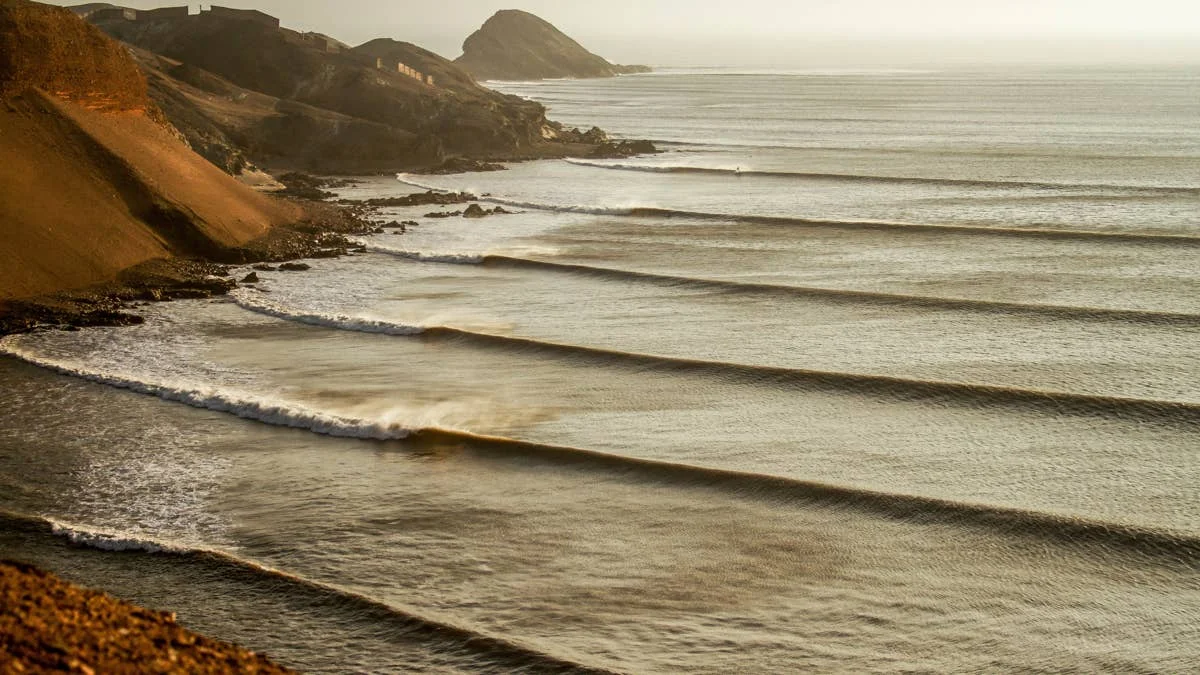
We know the likes of Peru gets overlooked in most El Niño surf talk, but it sits right in the path of the same North Pacific storm energy that bee-lines it to California, and long-period swells reaching that far down the coast tends to be well organized and clean by the time it arrives in Southern America. What kind of place likes long period, big swell? Easy. Pointbreaks. And Peru's packed with them. Think about Chicama under an El Niño swell spell? The joint will pop the eyeballs out of on-lookers faces. It definitely gets overlooked when thinking about Mavericks, or Pipeline or the likes, but there's little reason why Peru can't be elevated into the upper echelons of surf lore during the upcoming season – and not just because of Chicama. The country is packed with dazzling pointbreaks. Watch this space.
The Dazzling Wildcard: Mexico, Central America, and the Eastern Pacific Hurricane Belt
OK, here's another El Niño fact; it actually holds back wind shear and raises the sea surface temperature across the tropical Pacific. Which, if you were mixing your climate-driver-factors into a bowl, would be the correct ingredients to produce a hurricane. The three strongest Eastern Pacific hurricanes ever recorded, Patricia, Linda, and Rick, all formed during El Niño years, and all three sent long-period south swell straight to Mainland Mexico. Then, those breaks which rarely got swell suddenly over-produced, delivering some absolute dynamite along the coastline. This is a summer heading into fall affair though, rather than a winter one, which makes it a brilliant complement to the California and Hawaii winter window rather than a competitor. You can surf all up the coast and beyond!
The El Niño Mixed Bag: Indonesia, Fiji, Tahiti
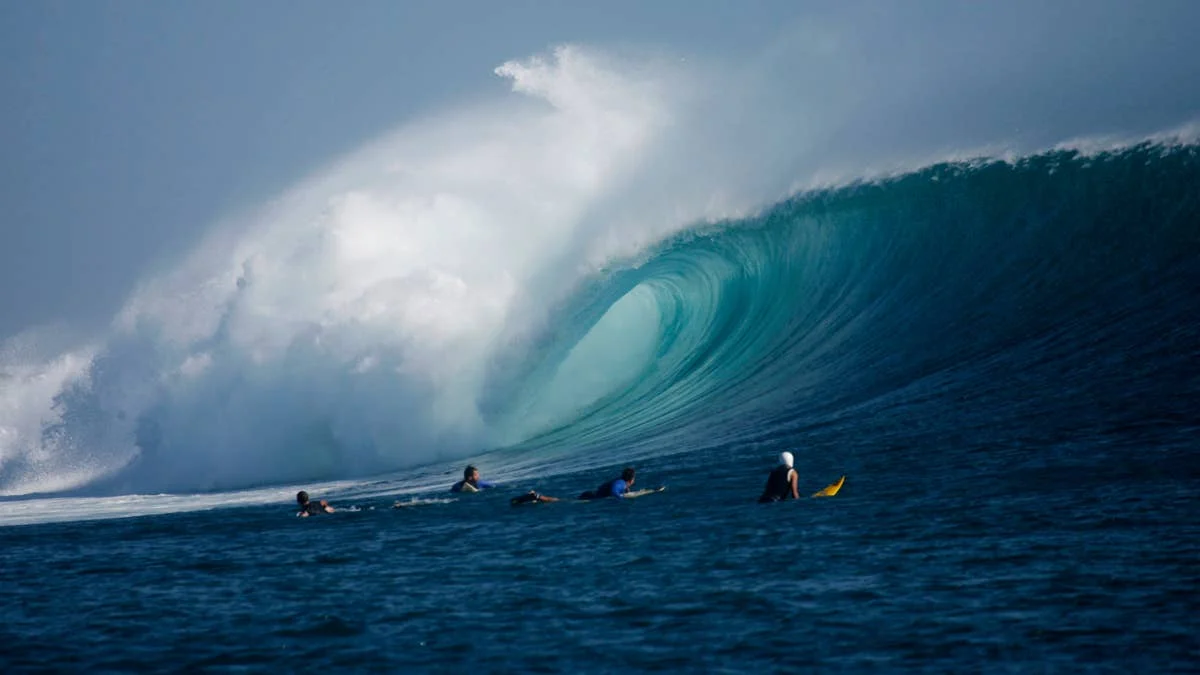
Here's where things get a bit messy. Indonesia's not necessarily a loser during an El Niño season. In fact, looking at historic data, there could be stronger than normal trade winds – which doesn't mean worse waves. For the Bukit, Sumatra and west or south-facing spots, this could mean more offshore conditions, sometimes more so than a typical season. More sheltered spots, like Keramas, may suffer because the wind just won't work for it. As for the Mentawais, the wind could take a bit of a bludgeoning, with stronger southerly winds on the cards. One possible benefit for an El Niño season in Indo is that it tends to delay the monsoon season, stretching the dry season out later into the year. So, it's more that Indonesia will be more wind-dependent, than pumping or flat. Fiji and Tahiti tend to see slower, more inconsistent stretches during El Niño but strong events have still produced some of the best individual swells on record there — it's a quieter average with real potential, not a guaranteed bust.
The Data Approach
What 50-years of weather data point to is pretty much the same conclusion. El Niño is a North Pacific and Eastern Pacific event at its centre, along with Hawaii, Mexico and Central America which could all win big this El Niño season too. If you're looking to score El Niño this time around, it's fairly simple – look at the American Pacific as a whole, not just the South Pacific.
Related: What Is El Niño? Everything to Know About the Climate Phenomenon