Waves and Love Connects Surf Travelers With Local NGOs
Surf tourism can bring travelers and spending to wave rich destinations while leaving local communities on the sidelines. Waves and Love, a platform launched by Thomas Vesper in September, aims to change that equation by pairing surf trips with local NGO work and directing part of travelers’ spending to those organizations. The model starts from a familiar tension: a destination can draw visitors because of its natural assets, while much of the economic benefit flows elsewhere. Waves and Love is betting that surf travel can support local groups more directly.
Travelers can choose a cause, from animal welfare to teaching children to surf, and get a customized itinerary that connects them with an NGO near the waves. The idea is to make time away from the water useful to host communities, while giving surfers a more direct connection to the people who live there. That connection depends on more than adding a volunteer activity to a holiday schedule; the organization has to match travelers’ interests and abilities with work that local groups actually need. The account provided so far describes the intended model, but not how the platform measures the value of that contribution.

Courtesy Waves and Love
Vesper’s concept brings together three parts of his own career: surfing, travel and international development. After years of surf travel, he completed a master’s degree in international development and moved into the NGO sector. “I sat down and asked myself what I really loved doing. I loved surfing, traveling, and the humanitarian and NGO sector. Why not try to combine all three?” he said. That personal route explains the platform’s premise, though the harder test will be whether it can turn an individual conviction into partnerships that work for organizations with their own priorities and limited capacity.
Traveling through Nicaragua and Costa Rica helped shape the idea. Vesper saw community organizations and NGOs working close to major surf breaks, but often struggling to attract funding, attention and volunteers. He saw a chance to connect travelers with groups that could put their time and skills to work locally. The gap he describes is not simply a shortage of visitors; it’s a mismatch between tourism’s visibility and the resources reaching community organizations. A useful program would need to make that link predictable, rather than leaving NGOs to absorb the costs of hosting short term visitors.
Building relationships on the ground
Waves and Love has established NGO partnerships in Peru, the Philippines and Senegal, and is looking to add destinations including Brazil and Mozambique. Vesper says each relationship starts with a video call, followed by an in person visit to understand how the organization operates and build trust. That sequence suggests an attempt to learn what a group does before sending travelers its way. It also makes clear that expansion is not just a matter of adding surf destinations to a booking menu: each new place brings a distinct set of organizations, needs and working relationships.
That process reflects his experience volunteering in Peru, where he saw the day to day constraints smaller NGOs face. “Having volunteers contribute their time and skills can make a huge difference to a small NGO. Everyone has something they can bring to the table,” he said. The potential is real, but volunteer time isn’t automatically useful. Groups need tasks that fit a visitor’s skills and the organization’s plans, and coordination takes time. For Waves and Love, the quality of that matching may matter as much as the number of trips it can arrange.

Courtesy Waves and Love
For Vesper, an in person visit matters because a partnership depends on more than remote introductions. “Building a human connection, meeting people, and developing trust are essential. I want our collaborations to be based on trust, rather than relying entirely on video calls,” he said. That approach recognizes a basic limit of platform based coordination: a video call can establish contact, but it can’t show every practical constraint or replace a working relationship. And this is the part most people overlook: trust is not just a founding step; it has to hold up as travelers arrive and expectations meet the realities of local work.
A different model for surf tourism
The platform’s broader ambition is to make surf travel more accountable to the places that host it. Vesper argues that tourism can become extractive when visitors stay in foreign owned accommodation, crowd local lineups, take their waves and leave without meaningful engagement. His criticism points to who benefits from the visitor economy, as well as how visitors behave. If the money and attention generated by a destination do not reach local communities, a trip can deepen the imbalance even when travelers come for the scenery and sport.
“I want to avoid a situation where more and more countries become Bali 2.0. Surf tourism is becoming increasingly significant, and the surf industry is expanding rapidly,” he said. His concern is that communities may be excluded while the ocean receives too little care. The comparison is a warning about a pattern, not evidence that every destination will follow the same path. Still, the underlying question is concrete: can a tourism business help make local groups visible and direct spending toward their work, while avoiding the assumption that a volunteer itinerary alone resolves the pressures tourism creates?
Connecting visitors with local organizations is his proposed response: it can support community work and give surfers a closer view of life beyond the break. “I think that connection is fundamental,” Vesper said. This is more significant than it looks if the connection is built around local priorities, because it asks travelers to treat a surf destination as a community rather than a backdrop. But the platform’s stated aim is only the starting point; the organizations’ experience of the partnership will determine whether the arrangement delivers practical value. If you’re working in this space, the distinction between a trip that includes local contact and one that serves local needs is the one to watch.
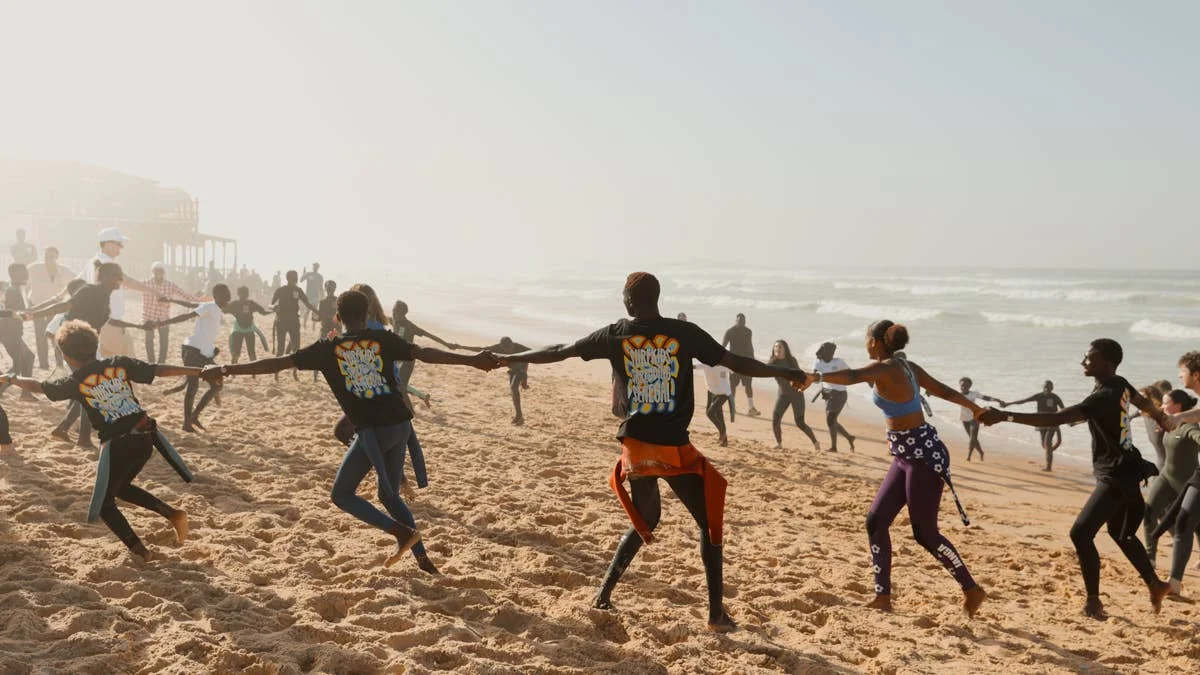
Courtesy Waves and Love
What expansion will test
As Waves and Love expands its destination list, its value will depend on whether those local ties remain central to the trip. More locations could give travelers more ways to take part, but each partnership will require the same attention to trust, fit and follow through that Vesper describes in existing destinations. Growth alone won’t show whether the model works. What matters is whether NGOs find the support useful and whether a portion of travelers’ spending reaches the organizations as intended.
For surf travelers, the proposition is straightforward: spend time with the people who call the break home, and let the visit contribute to work already underway there. The broader test is whether the platform can make that proposition reliable across destinations without reducing local organizations to an add on for a holiday. That’s the work ahead.