Twin Fin Invitational Blends Surfing, Basque Culture and Shared Hospitality
A contest built around expression
The Twin Fin Invitational has built its identity around a simple idea: make room for surfing that rewards feel and imagination, then let the week around it matter as much as the heats. Now in its third year, William Aliotti’s event brings international surfers together to ride twin fins and share a distinctly Basque welcome. The design gives the gathering a point of view: it asks what surfing looks like when style and community carry as much weight as a conventional result.
The format keeps the focus on expression. Men and women surf together in mixed heats across two days, with surfers and filmers judging performance throughout the week. A video recap shown at the closing ceremony decides the winners. That structure gives the event a different center of gravity from a conventional contest: the footage, the people and the shared experience all count. It also places unusual weight on how surfing is remembered and presented; a single moment in a heat has to work in the context of the week’s collected images.
SURFER is an official media partner and will host the four-episode series on its YouTube channel.
A welcome in Zarautz
The series opens with “Ongi etorri,” Basque for “welcome.” Its first episode follows the gathering beyond the lineup, including a trip to San Sebastián on a flat day. Aliotti says the outing reflected what he wanted to share with the riders: “I love good food and this is the capital of incredible food. It was such a joy to share this with all the riders.” The choice to begin away from the surf is telling. A surf event can make its host town feel like scenery; this one presents local food and company as part of the reason to be there.
The weather opened with a flat day, but forecasts offered promising surf later in the week. The organizers could wait for the right windows at Zarautz’s beach break instead of trying to force a session. That flexibility matters: when conditions set the schedule, a contest’s identity depends partly on what happens between heats. Shelter Bar, owned by local surfer Aritz Aranburu and set along Zarautz’s promenade, became the event’s base. Breakfast, coffee, pintxos and late night beers shaped the daily rhythm; a welcome concert by The Currens gave the gathering a soundtrack.
Tom and Pat Curren traded drums and guitar, with both adding vocals while Lee-Ann Curren led the set. Their performance captured the event’s easy social tone. A moment between Lee-Ann and Kaito Ohashi offered a similar counterpoint to contest tension. Here's the thing: those details can make an event feel more inviting, but they also explain why the series spends time outside the water. The surf is still the premise; the community is what gives the week its shape.
Classic boards, new lines
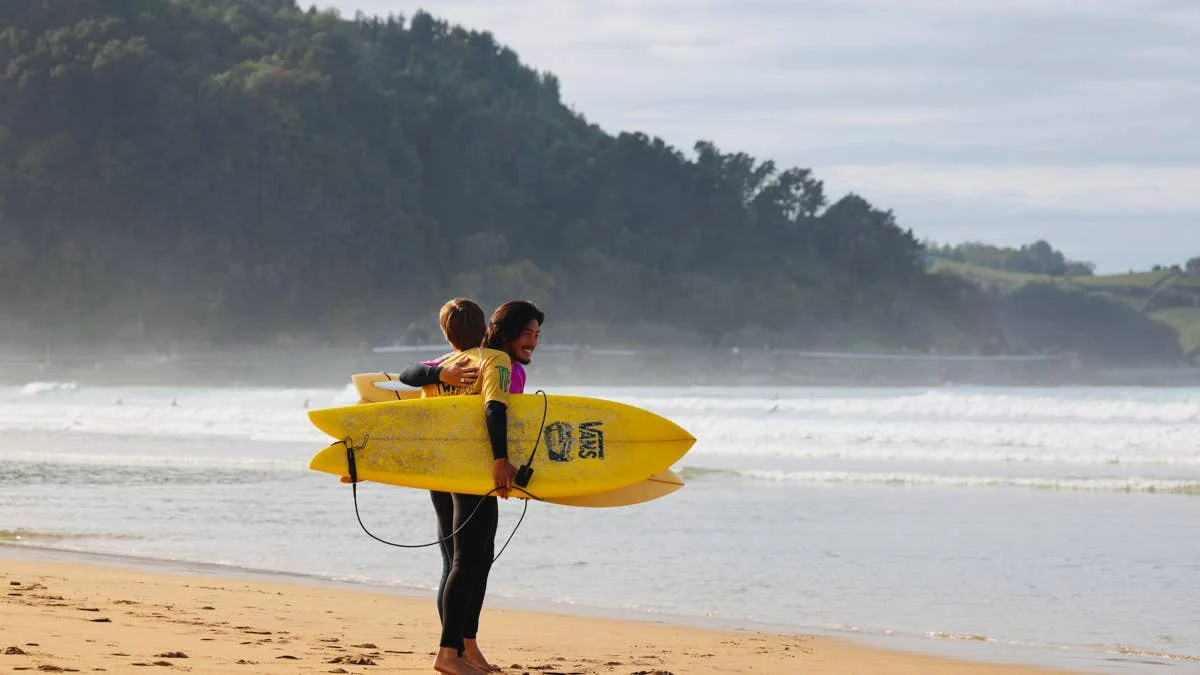
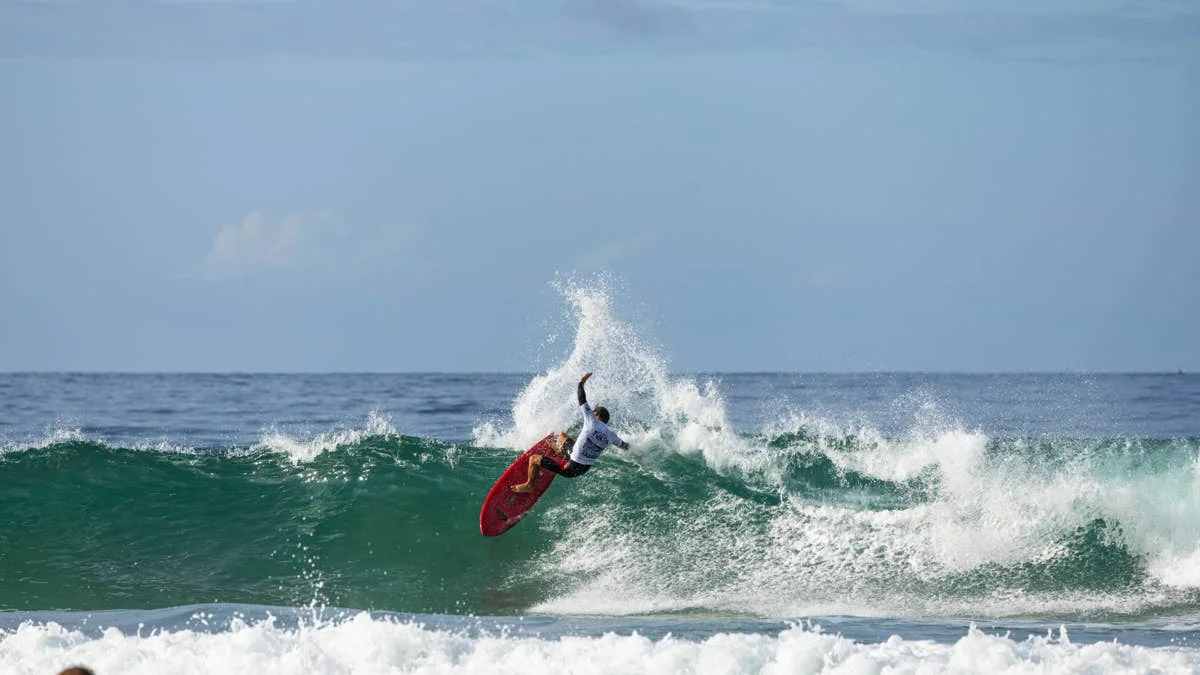
The event’s twin fin rule points back to surfboard designs from the early 1970s, including the fish, which began as a kneeboard. Tom Curren sees that history in the riding on display. “They had a good idea, a very exciting idea,” he said, and the design still draws some of the world’s best surfers. “You see all kinds of amazing surfing on the fish now.” The board’s history gives the event a useful constraint: riders share a basic design brief, while their lines and choices still leave room for individual style.
@gorka
The field brought together surfers from Japan, South Africa, Australia, California, Hawai’i, Portugal, France, Tahiti and Euskadi, the Basque Country. Riders included Aritz Aranburu, Kepa Acero, William Aliotti, Ainara Aymat, Eli Beukes, Miguel Blanco, Nahia Calder, Lee-Ann Curren, Pat Curren, Tom Curren, Gatien Delahaye, Ian Fontaine, Brendon Gibbens, Ian Gottron, Alex Gray, Kepa Housset, Iñigo Idigoras, Zoe Jackin, Maud Le-Car, Clay Marzo, Ander Mendiguren, Greyson Messier, Kaito Ohashi, Axel Oregi, Rudy Palmbloom, Sam Piter, Clement Roseyro, Garazi Sanchez, Sara Taylor, Chippa Wilson and Lili Young. The range of origins puts local riders alongside visitors with very different home breaks and approaches. Mixed heats make that variety visible in the water, where the shared equipment and format provide a common frame without flattening the differences.
@gorka
What the format leaves behind
The opening episode sets up a gathering where the session is only part of the draw. The next installment heads to Mundaka for a day of surf, carrying the same mix of local culture and twin fin experimentation into a new setting. The series gives viewers a way to follow the event’s rhythm, while the closing video recap remains central to how its winners are chosen. That approach makes the Invitational’s values legible, though it also asks the audience to accept a broader definition of competitive performance.
If you're working in this space, the format is a reminder that a surf contest can be designed around what it wants viewers to remember, not only around a heat result. This is more significant than it looks: the boards, shared meals and local setting all reinforce the same idea of surfing as both performance and culture. The test will be whether that balance stays compelling across the full series and the move to another break. For now, the opening chapter makes its case through people and place as much as through waves. Eskerrik asko — thank you.
Related: Why Are Some of the World’s Best Freesurfers in Zarautz This Week?