Canelo Alvarez Reclaims WBC Super Middleweight Title With Win Over Mbilli
A return built on timing
Canelo Alvarez’s return to the super middleweight summit hinged on a familiar adjustment: he let Christian Mbilli spend energy pressing, then made the challenger pay when he stepped into range. A unanimous decision in Riyadh gave Alvarez the WBC title and answered some of the questions raised by his loss to Terence Crawford. The result matters, but the method matters too. Alvarez didn’t need to match Mbilli’s pace from the opening bell; he used patience to turn the challenger’s aggression into openings.
That approach offered a practical test after a long absence. Alvarez had been out for 413 days following the Crawford defeat and elbow surgery, leaving questions about how much his timing and ability to sustain a fight had changed. One victory can’t settle every question about a fighter’s form, especially against a challenger whose output faded as the bout went on. Still, Alvarez showed he could read an aggressive opponent, adjust across rounds and remain dangerous late.
Mbilli’s early pace, Alvarez’s counters
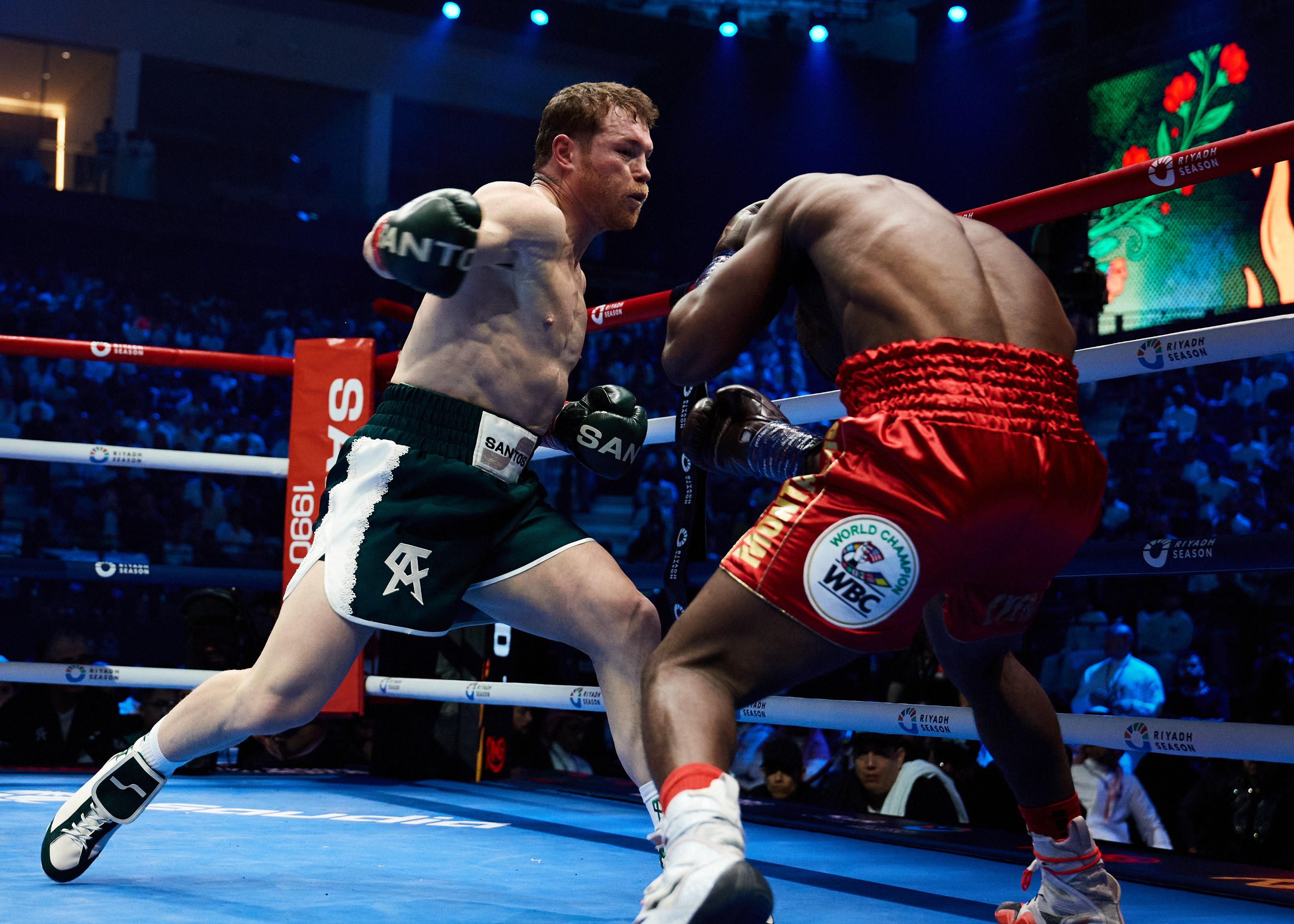
Mbilli started at a high tempo, driving Alvarez toward the ropes and throwing in combinations. In the first three rounds, the 31-year-old Frenchman had the busier hands, while Alvarez leaned back, slipped punches and looked for openings. A right hand passed close to Alvarez’s chin in the second, and Mbilli’s volume kept the Mexican occupied in the third. The early exchanges established Mbilli’s preferred terms: forward movement, frequent punches and pressure that forced Alvarez to keep responding.
Alvarez didn’t panic. He beckoned Mbilli forward, then met one advance with a hard counter right. By the fifth, he was stepping in more often, bringing his lead left around Mbilli’s guard and following with the right. His left hook began to shape the exchanges: when Mbilli crowded him, Alvarez found room to land several hooks in succession. That change was subtle but consequential. Alvarez was no longer simply absorbing the challenger’s pace; he was making Mbilli pay for closing distance without enough caution.
The clearest turning point came in the seventh. Alvarez waited for Mbilli to rush in and drove a right uppercut through the middle, rocking him. From there, Alvarez’s punches landed with increasing regularity as Mbilli’s output eased. The challenger appeared more cautious about committing, particularly after absorbing Alvarez’s hooks. A single punch didn’t decide the fight, but it changed the terms of the exchanges: Mbilli had to account for the cost of every forward surge.
A measured finish and a returning champion
By the 10th round, Alvarez was dictating the action with his jab, switching between head and body targets before bringing the left hook around the guard. Mbilli, who had spent the opening rounds marching forward, was now giving ground. He tried to raise the pace late, including a flurry against the ropes in the 12th, but Alvarez answered with another sharp right uppercut that buckled his legs. The late sequence underscored the shift in control. Mbilli could still attack, but Alvarez was better placed to choose when and how the exchanges happened.
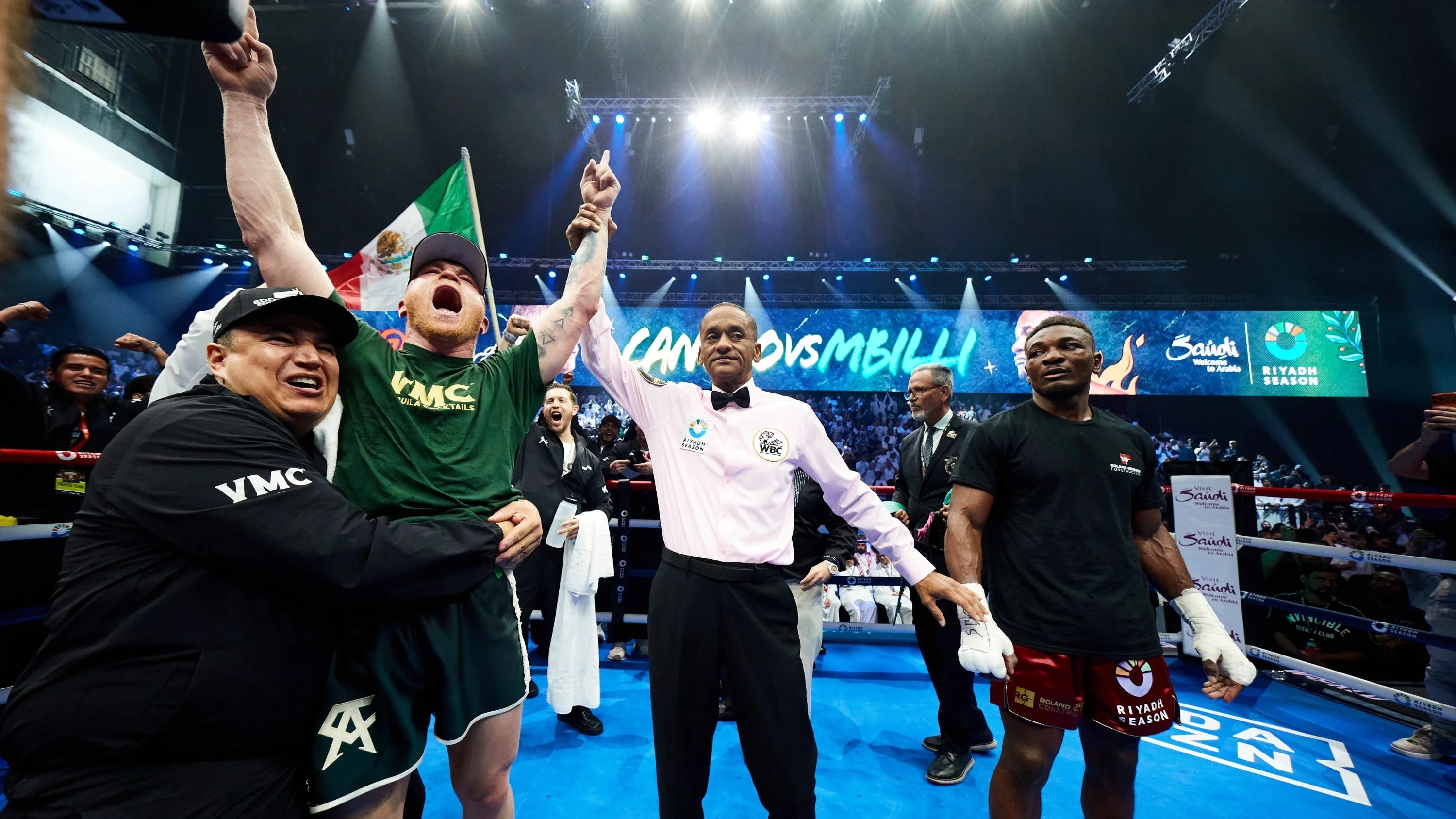
The judges scored the fight 115-112, 116-111 and 117-110 for Alvarez. The result moved him to 64-3-2, with 39 knockouts; Mbilli fell to 29-1-1, with 24 knockouts. The cards differed on the margin, yet all three favored Alvarez, reflecting his control as the bout progressed. His record now includes another title victory, while Mbilli’s first defeat leaves him with a clear measure of the difference between pressing a champion and consistently troubling one.
At 36, Alvarez showed that the layoff hadn’t erased his ability to manage an aggressive opponent over 12 rounds. But the fight also wasn’t a simple return to his peak: Mbilli’s fast start exposed stretches when Alvarez was content to defend and wait, and the decisive shift came as the challenger’s work rate eased. That’s a useful distinction. The performance demonstrated experience and timing; it didn’t remove the need to see how Alvarez handles other styles and sustained pressure.
Alvarez called the performance “perfect” and described the championship as feeling like his first. “21 years as a professional and 16 years after I won my first title – now I've won again,” he said. He plans to rest for a couple of weeks before returning to training. The comments frame the win as both a personal milestone and a new chapter after the Crawford loss, though his next steps will say more about what this title means in practice.
The fight week had also been marked by criticism of organisers SELA and Turki Alalshikh for proceeding amid security concerns after missile and drone strikes targeted Riyadh in recent weeks. That context sat alongside the sporting story, raising questions about the decision to stage the event in those circumstances. Inside the ring, though, the defining story was Alvarez’s composure under pressure and the precision that gradually took Mbilli out of his rhythm. He may not be the fighter he was at his peak, but this win keeps him firmly in the 168-pound title picture.
What the win says about Alvarez’s next chapter
Here’s the thing: a title win is a strong answer to doubts about whether Alvarez could return to championship form, but it’s not a complete answer about where he stands against the division. The bout showed a familiar strength—turning an opponent’s forward movement into chances to counter—and a more limited claim: that he can still execute that plan over 12 rounds against this particular challenger. This is more significant than it looks because the adjustment unfolded gradually, rather than through a quick finish.
If you’re working in this space, the useful signal is how Alvarez managed risk as the fight changed. He didn’t chase Mbilli when the challenger was fresh, and he stepped up his own work as Mbilli’s pace receded. That kind of control can make an experienced boxer difficult to unsettle. It also depends on reading the opponent correctly. The opening rounds were demanding, and against a fighter who maintained pressure for longer, the same patient approach could ask different questions.
And yet. Alvarez leaves with the WBC belt, a decision victory and evidence that his timing survived a long spell away from the ring. The numbers here are underwhelming as a measure of dominance in the early rounds, but they don’t capture the way he gradually shifted the fight in his favor. The next chapter will depend on whether he can repeat that control against varied opposition. For now, he’s back among the super middleweight titleholders—and the performance gives him a credible case to remain there.