Surfboard Evolution: From Polynesian Olo to Modern Thrusters and Sustainable Shapes
The surfboard’s history is a record of changing priorities: first durability and tradition, then lighter construction, maneuverability and performance, and now a growing interest in materials. Each shift changed what surfers could do on a wave. The modern shortboard, the twin fin and the thruster all emerged from experiments with length, weight and fin placement; current designs are also revisiting older outlines while adapting newer materials.
That evolution didn’t follow a straight line. Surfers have repeatedly returned to shapes that suit particular waves, even as new construction methods made different designs possible. The boards on the rack today reflect that mix: decades of refinement alongside renewed interest in fish, mid-length and other less specialized forms.
Polynesian roots and wooden boards
Surfing, known in Hawaiian as he’e nalu, has deep roots in Polynesia. Traditional wooden boards included the olo, the alaia and the kiko’o. The olo could exceed 16 feet and was associated with Hawaiian royalty. The alaia was shorter, while the kiko’o sat between the two in size. These boards were heavy and finless, demanding skill to paddle and ride.
The precise date of the first surfboard is unknown, and historical accounts vary. Polynesian board forms remained influential into the early 20th century. Surfing also carried spiritual meaning, a connection that still shapes how many surfers describe their relationship with the ocean.
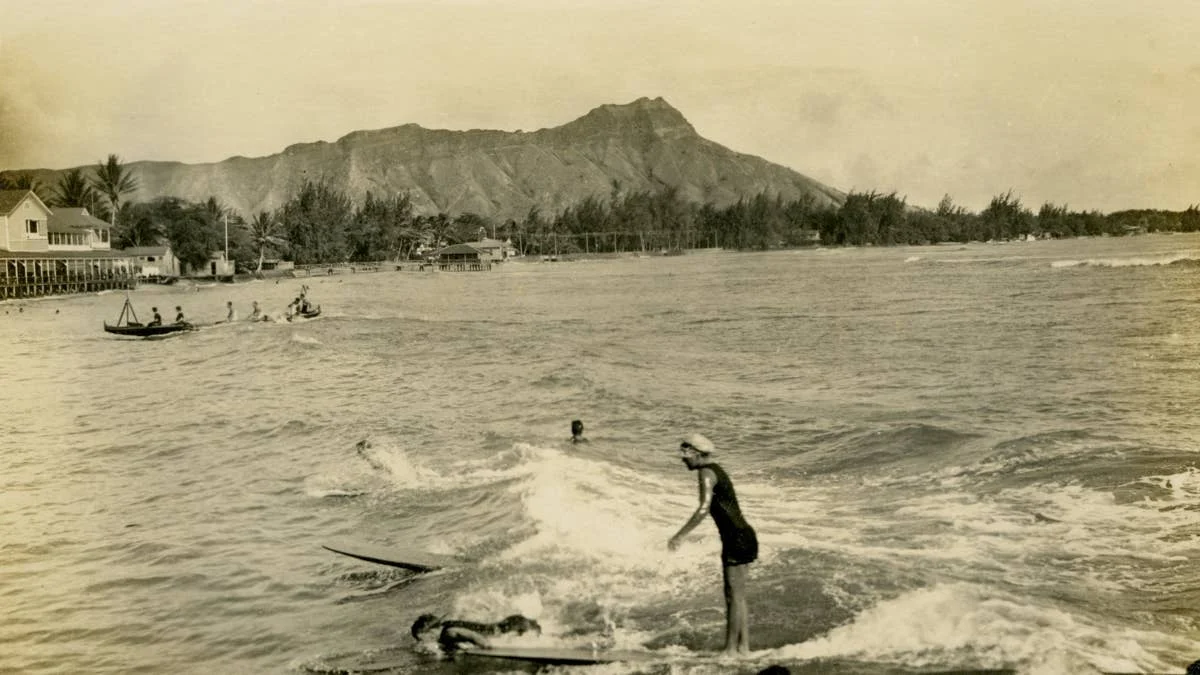
In the early decades of the 1900s, Duke Kahanamoku helped introduce surfing to audiences around the world. He rode heavy redwood boards, and his influence helped carry the sport beyond its established centers. Shapers began testing different lengths, widths and thicknesses, recording how each design behaved in varying conditions. Surfing was still practiced in relatively few places, but the board was becoming an object of active experimentation.
Hollow construction and the first fin
Tom Blake’s hollow-board design marked a major change in the late 1920s and early 1930s. Built with an internal wooden frame and ribs beneath plywood decks, the board borrowed ideas from airplane-wing construction. The design, nicknamed the “cigar box,” cut the weight of a solid timber board roughly in half. It remained vulnerable to water absorption, so Blake also devised a drain plug.
In 1935, Blake added a speedboat fin to the underside of a board. That simple addition gave riders more control when changing direction and opened the door to further experiments with fin shape and placement. The boards remained wooden, but Blake’s work established two ideas that would keep resurfacing: reduce weight, and use fins to influence how a board turns.

Fiberglass opens the door to shorter boards
The Malibu-style longboard helped popularize a lighter construction approach in the 1950s. Balsa wood and fiberglass reduced weight, while polyurethane foam blanks and polyester resin gave shapers a different way to build boards. Compared with earlier wooden designs, these materials made shaping and experimenting more accessible. Shapers could adjust templates and fin positions more readily, and surfers had more options for matching a board to local conditions.
The shift helped surfing spread, especially in California and Australia. Yet the longboard’s dominance wouldn’t last. The 1950s experiments prompted a practical question: could a shorter board turn more tightly and handle critical sections of a wave with greater precision?
Related: How To Surf a Twin Fin With Josh Kerr
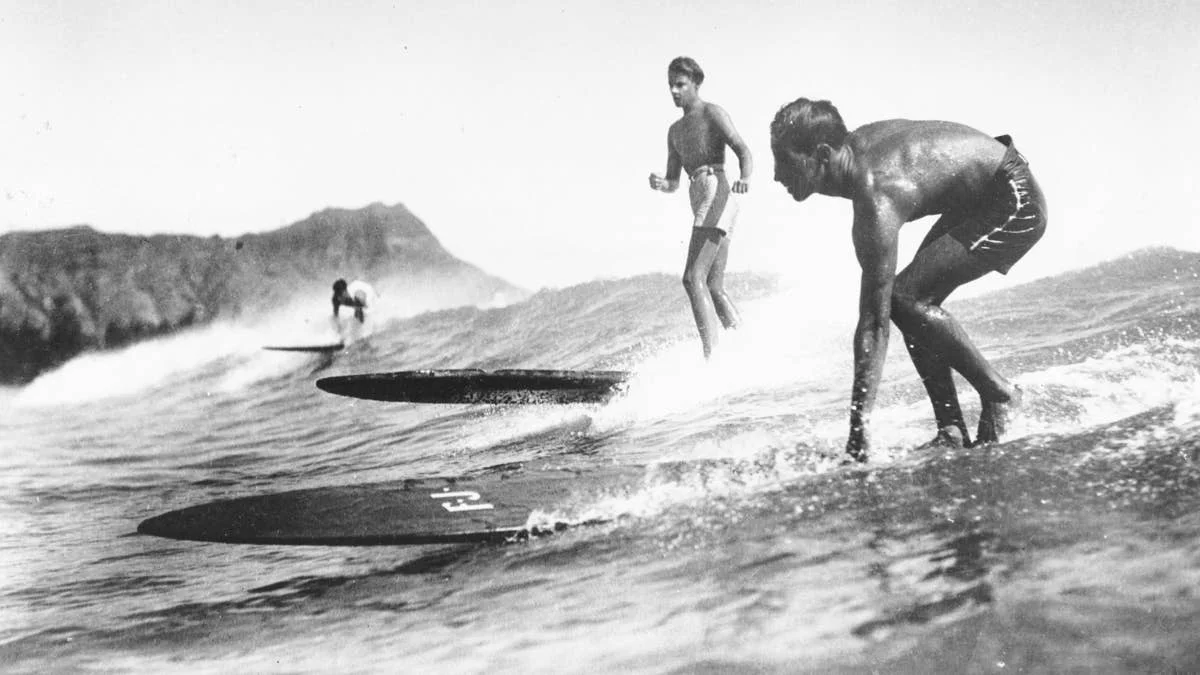
Through the 1960s, boards that had once stretched beyond 10 feet began shrinking to seven feet and, in some cases, six. The shorter outline favored tighter turns and a more direct approach to performance surfing. California surfer George Greenough helped push the idea through his use of unusually short kneeboards. Australian shaper Bob McTavish then carried that thinking into stand-up surfboards, cutting down traditional longboard dimensions and helping establish new foundations for modern shaping.
Twin fins, then the thruster
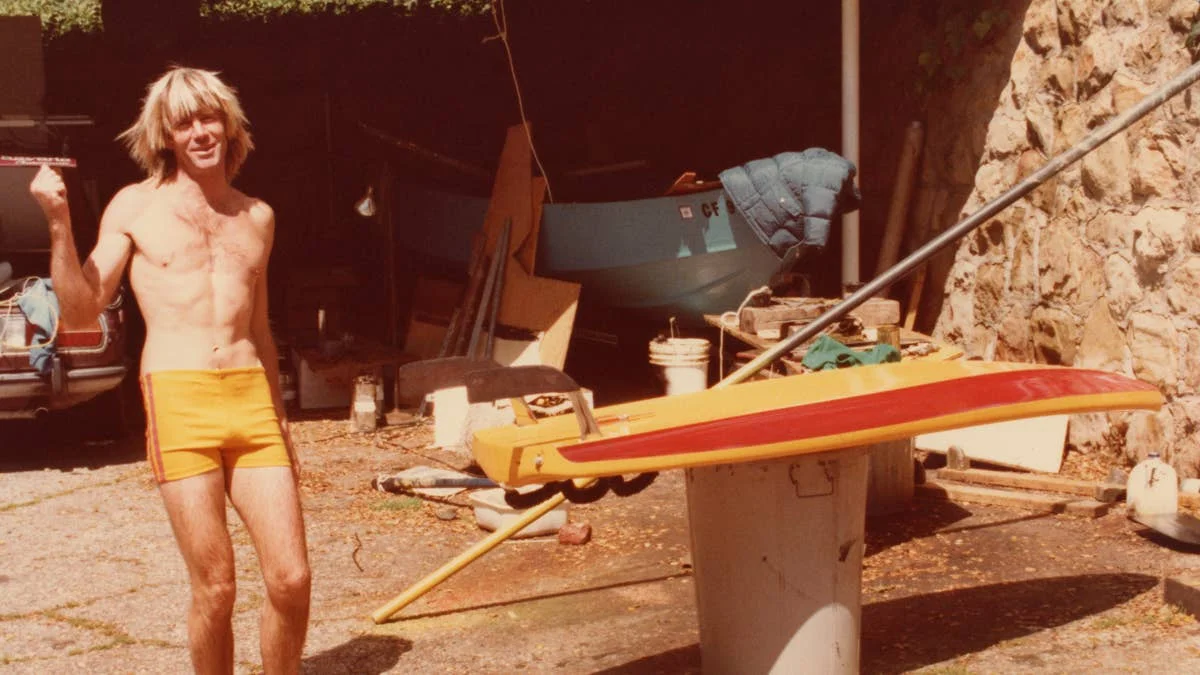
Tom Blake had experimented with twin fins decades earlier, but Mark Richards’ 1976 design brought the configuration into wider use. Richards saw a weakness in the single fin: it could feel limiting in smaller surf. His twin-fin boards offered more maneuverability in those conditions, though the design was less suited to larger waves. The twin fin gave surfers a distinct alternative and remains a popular choice for its lively feel.

Simon Anderson’s three-fin setup became the defining performance design of the 1980s. Introduced in 1981, the thruster placed two fins at the sides and one at the center. The arrangement gave surfers a blend of drive and control that supported harder turns and more committed surfing. As boards and shapes continued to change, the thruster remained central to high-performance designs.

Computer shaping and a return to variety
As thrusters became familiar, boards generally grew shorter and thinner, while shapers explored tail outlines, rail thickness and bottom contours. During the 1990s, computer-controlled cutting began to change production. Digital tools gave shapers greater precision and made it easier to reproduce designs at scale. They expanded the available methods without removing the role of the shaper’s judgment.
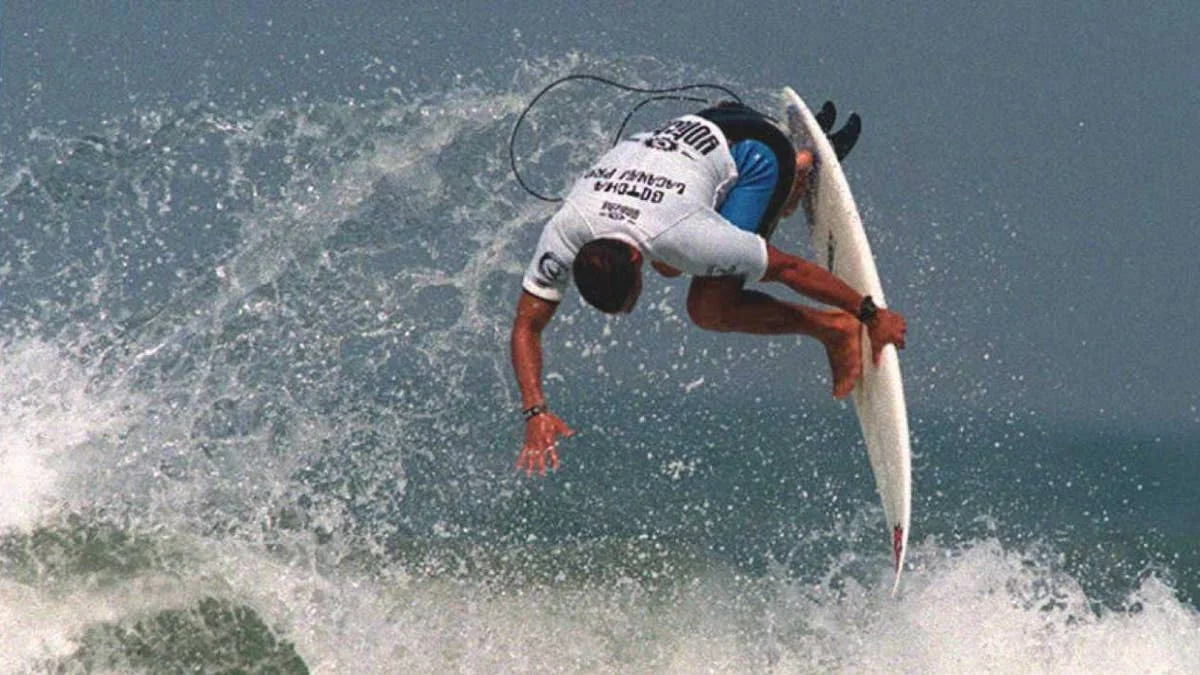
By the 2000s, some surfers were looking beyond narrow, highly specialized shortboards. Fish designs, retro outlines and wider boards returned, often built with modern materials. Volume became a more prominent part of board selection, and owning different shapes for different conditions became common. EPS foam and epoxy resin also gained ground as alternatives to polyurethane and polyester construction. Hybrid boards, sitting between fish and performance designs, offered another way to balance speed and control.
Materials and shapes keep changing
Computer-aided design was standard across the industry by the 2010s, supporting precise profiles and production around the world. Grovelers gained popularity as surfers sought boards suited to weaker waves. Builders also experimented with carbon fiber and composite materials to affect flex and durability. Channel Islands, for example, developed Spine-Tek, a precision-engineered stringer running down the center of the board, and used carbon patches in the tail.
Today, sustainability has become a more visible part of board construction. Bio-resins and blanks made with bio-polyester, including Polyola, are entering the market. The mid-length has also returned, often paired with a pin tail and twin fins. That combination can suit larger, more powerful waves with plenty of open face, while offering a more forgiving alternative to highly specialized shortboards.
Related: How To Surf a Mid-Length Surfboard
The next chapter will likely depend on how well builders can pair useful performance with materials that reduce environmental impact. Surfboard history suggests that progress rarely means abandoning older shapes: it means finding new ways to make them work for the waves surfers actually ride.