Court Revokes Permits for Rincón Bike Path Project, Protecting Tres Palmas Marine Reserve and Rincón Surf Break
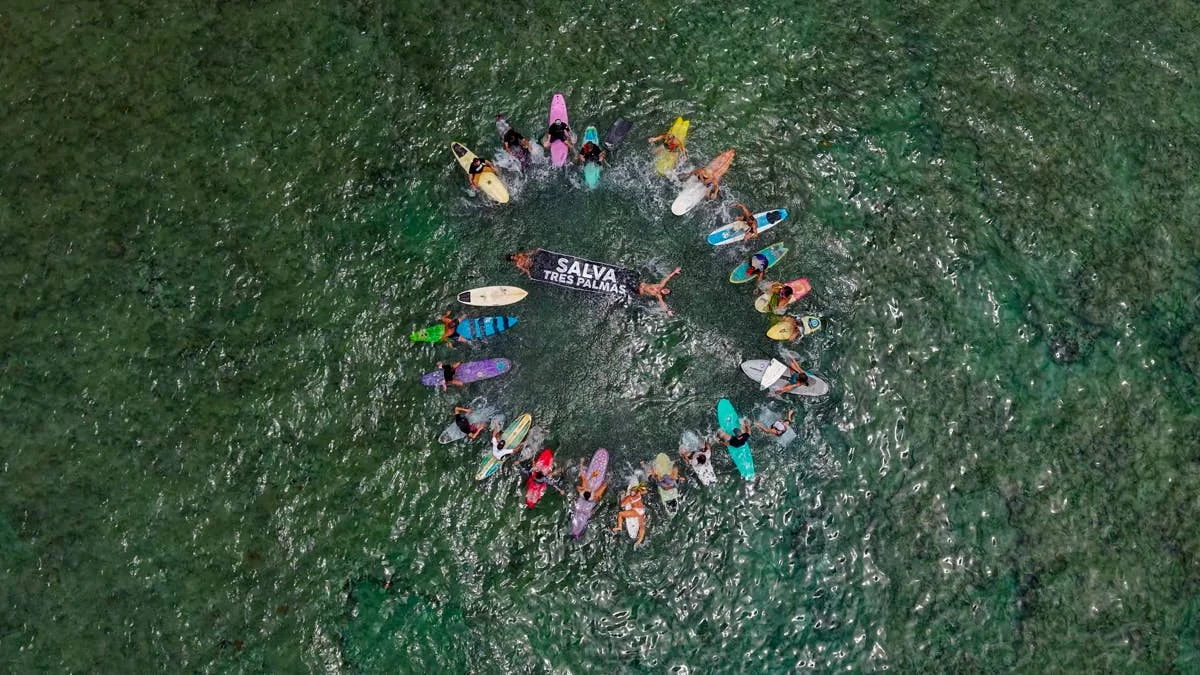
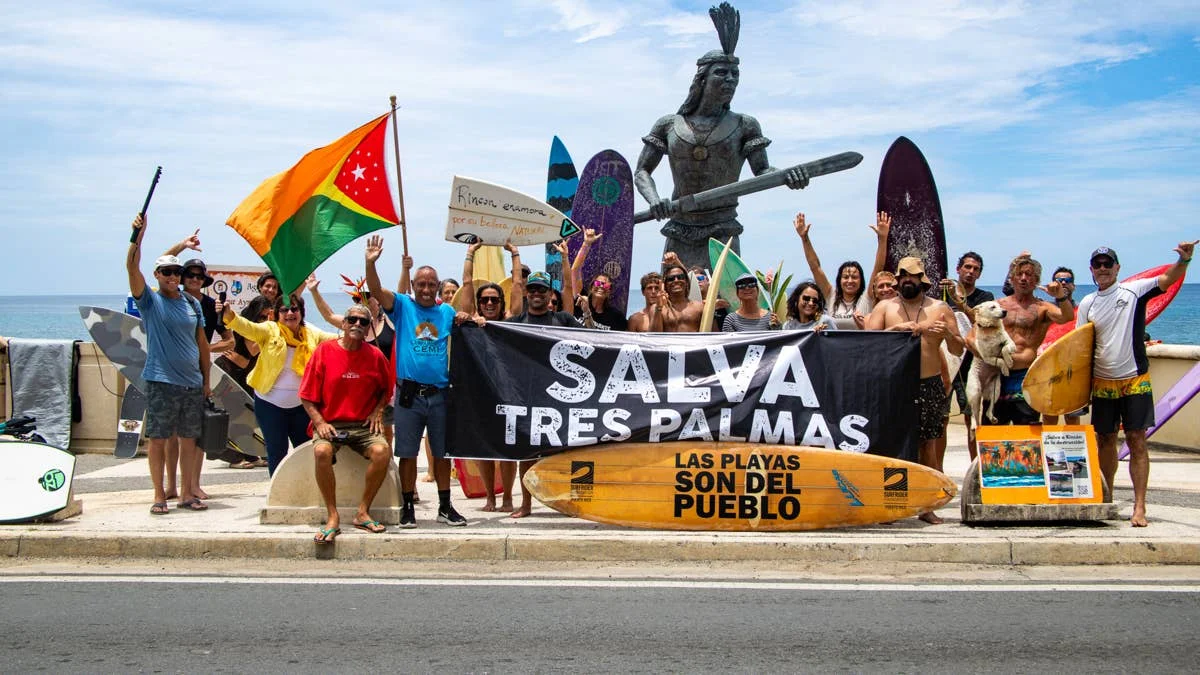
For nearly two years, the community of Rincón, Puerto Rico showed up in every way they could. From paddle outs and marches, to fundraisers and public meetings, to a constant digital effort, and on the gnarliest days, watching their neighbors get arrested on the front lines of protests. Last week, a court in Aguadilla handed them a clear victory. Something increasingly rare in the long and grinding fight to protect coastal ecosystems, the kind of good news we could all use.
A judge has revoked permits for the Rincón Bike and Pedestrian Path project and ordered an immediate halt to all construction. The ruling found that the Puerto Rico Highways and Transportation Authority authorized and processed the project in violation of regulations by making substantial changes without required amendments, using incorrect or incomplete information, and obtaining permits and certifications that didn't comply with legal requirements or existing environmental restrictions. The court also determined that the project impacted protected areas of high ecological value, including the Maritime Terrestrial Zone and public domain lands, and has ordered a plan to identify affected areas and establish stabilization and environmental remediation measures. At the center of all of it is Tres Palmas Marine Reserve.
What's At Stake
Surfrider Foundation
Established in 2004, Tres Palmas protects one of the most significant coral reef ecosystems in the Caribbean that is home to elkhorn coral, sea turtles, tropical fish, and dozens of marine species, and acts as a natural barrier that shields Rincón's coastline from storms and erosion. The wave is internationally recognized as one of the best and heaviest spots in the region, even earning comparisons to the North Shore. This is thanks in no small part to the health of the reef beneath it and the conditions that make this corner of Puerto Rico unlike anywhere else. Bosque la Armonía, a biodiversity refuge and wildlife corridor that serves as a site of environmental education for the community, was also directly in the proposed project's path.
The coalition that formed to stop it was as broad as any environmental fight Puerto Rico has seen in recent memory. Amigos de Tres Palmas, Paseo Responsable, Bosque La Armonía, Campamento CEMI, Siete Colindantes, Rescate Camino El Faro, Rincón Water Safety, Isla Mar, and Surfrider Foundation Puerto Rico all supported the effort, while more than 150 local businesses added their names publicly. Scientists, attorneys, volunteers, and donors from Puerto Rico and around the world contributed time, money, and sustained pressure over the course of eighteen months. Every dollar raised going toward legal costs, expert testimony, and the organizational infrastructure needed to outlast a well-funded government project.
A Precedent Beyond Rincón
Surfrider Foundation
The implications of this ruling extend well past the boundaries of one surf zone. For communities across Puerto Rico, the decision reaffirms something that too often gets tested and lost: that environmental law has teeth, that community participation in the protection of natural resources is a legitimate and enforceable right, and that no project — regardless of who promotes it or how much capital stands behind it — can proceed in violation of the legal and environmental review processes designed to protect these places. The decision also opens a harder conversation about public policy, and why communities routinely shoulder enormous financial burdens to defend natural spaces while government-backed infrastructure projects sometimes advance without full legal compliance.
Tres Palmas Marine Reserve has functioned as a community-based conservation model for more than two decades, built on scientific research, environmental education, and participatory management. What happened in Rincón over the last eighteen months adds a new and important chapter to that larger story. One that surfers, environmentalists, and coastal communities far beyond Puerto Rico should be paying attention to.
The reef is intact. The wave is safe. And the people who protected both proved that organized, sustained civic action can still win.
Related: How a PhD, a Brother, and a Big Risk Created Puerto Rico's Most Powerful Surf Program