Axel Medina, 17, Was the Only Mexican in the Water at Zicatela on the Biggest Swell of the Year — Portrait of an Underground Charger
Axel Medina is 17 years old and he may be small, but when Puerto Escondido gets heavy, he's all over it. On the morning of the biggest day of the insane south swell bender last month, he was the only Mexican in the water at Zicatela.
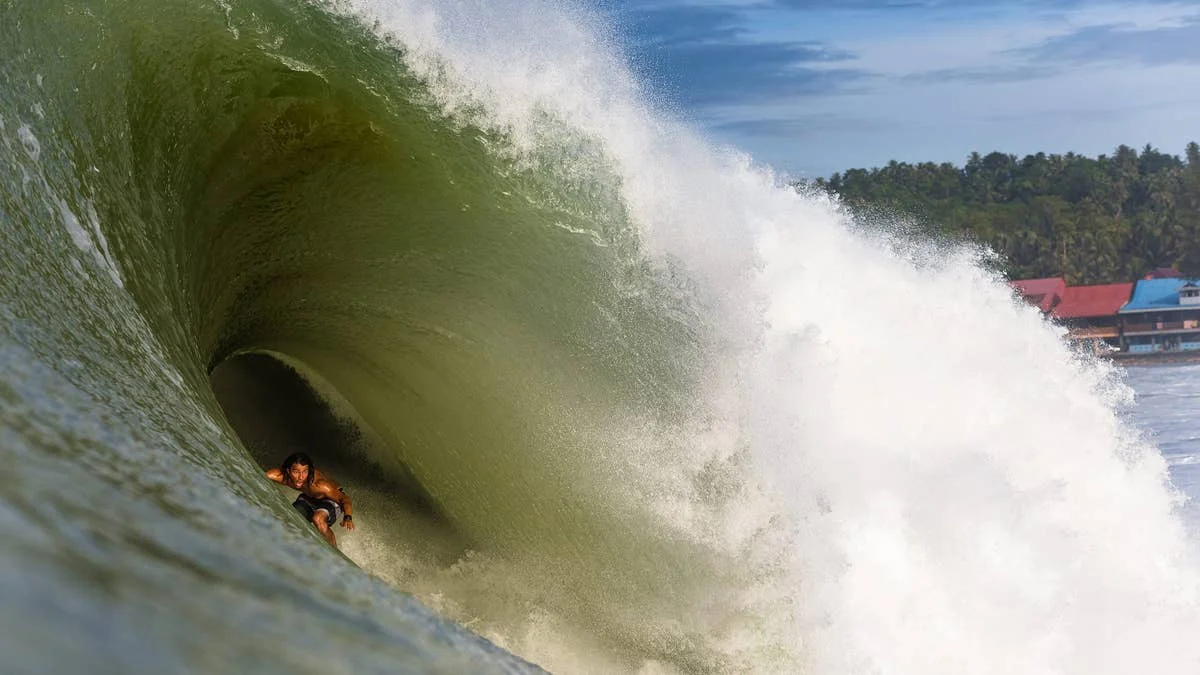
The waves that day were 30 to 40 feet, with faces pushing past 50. The day before had produced what locals in Puerto Escondido are calling a renacimiento (a rebirth) of the sand bottom at Zicatela, the wave that's often called the Mexican Pipeline. By the time Axel arrived with his board and his inflatable vest, even the seasoned veterans were on the rocks watching. The vibe wasn't pretty, it was more like terrifying. Slab lord Nathan Florence was in town for the run and dropped an episode that shows the madness, see below and read on for Axel's story.
"They told me, 'Don't go in, it's too heavy. The skis don't have enough power. We're not going to be able to rescue you,'" Axel says of the locals who tried to talk him out of paddling out. "I lied and told them, 'I'm not going out to catch waves. I'm just going to paddle out and feel the vibe.'"
He paddled out and he went for it, swinging on massive waves. Even if they were impressed, they scolded him on the beach when he came in. This is who Axel Medina is.
Born Into It
Axel comes from a Puerto Escondido surf family. His dad surfed Zicatela. His grandparents supported him. His mother still chips in for travel and contest entries. He was raised in the water before he could even walk.
"Since I was little, my dad would take me to the sea," Axel says. "He'd grab me by the ribs, lift me up, and carry me on the wave." The waves he chases aren't the technical small-wave maneuvers that have come to define modern competitive surfing. They're the some of the heaviest in the world.
"My approach isn't really about maneuvers," he says. "It's more about big waves."
He grew up watching the local chargers like Jafet Ramos, Roger Ramírez, Marcial Monreal, and his own father. Each one a Puerto Escondido legend who proudly represent the lineage Axel is stepping into.
The Wipeout
The day of the swell, Axel brought his inflatable vest and sat on the rocks for an hour, watching, waiting to see if it was worth it. After seeing Tom Lowe and Logan Hayes paddle out and find waves. He wanted some for himself.
"I told myself, 'You know what? I'm going to go out at least to paddle and feel the vibe,'" he says.
The first wave came up empty. He turned for it, but it ramped into a double-up at the last second, exploded, and tossed him over the falls. "But I didn't feel that one too hard," he says.
The second one found him deeper than he wanted to be. "I went to paddle for another wave and it didn't look that big. I duck-dove and it exploded. It started to spin me, push me down. It made me touch the sand, like I was doing a squat."
He tried to push off the bottom and couldn't. "I said, 'No, I have the vest.'" He reached behind for the release pull. He couldn't find it. The vest's handle had ridden up behind him.
"When I finally pulled it, I shot up to the surface. But another wave was already coming. So I deflated the vest to be able to duck-dive."
When he finally came up, he paddled right back out. Asked what was going through his mind during the worst hold-down of his life, Axel's answer was simple: find the handle, pull it, breathe, get ready for the next one. That's it, no room for any other thoughts.
"I told myself, 'Are you sure you're going to drop in?'" he says of the moment before the paddle. "Then I said, 'Nah, balls out.'"
It Takes a Village to Raise a Charger
Axel may have paddled into those waves alone, but the path that got him there was anything but a solo journey.
Ask Axel who got him here, and he'll start with the practical names. León, a friend with a car who shuttles Axel and his big boards from the center of town to Zicatela — no small thing when you're chasing swell windows with quivers that don't fit on a scooter. Vandielli Esmael Días, aka @casalunalu_mx, who films his sessions and reviews the footage with him so they can find what's working and what isn't.
"They help me see what I'm doing wrong, keep correcting it, and get better," Axel says. Then his family. His parents and grandparents who fund the travel for contests. His girlfriend, who keeps him motivated.
Then his mentor, Jafet Ramos. Jafet, a Puerto charger in his own right, started working with Axel about six months ago. He spoke to Axel's father first. Then he started coaching.
"He was one of the first people who helped me learn how to get out of a tube," Axel says. "I see Jafet as a coach. When Zicatela is heavy, you normally have to worry about yourself, not someone else. And Jafet knows the wave so well that he worries about the people he's helping." He charges," Axel says of his mentor. "He really goes."
Through the Lens
A longtime Puerto Escondido photographer, Vandielli has documented Zicatela for 22 years and was on the beach the morning of the swell. He saw Axel walk past his house with the board and the vest and whistled to get his attention. They made contact and he said, "From that moment I was sure he was going in."
That kind of certainty comes from years of watching Axel grow up. He's seen what he calls "the most passionate young big-wave surfer" of his 22 years on this beach.
"Axel is really connected with the ocean," he says. "With surfing, with classes, with fishing. He's prepared. I trust him. Obviously in extreme conditions anyone can be vulnerable, because the sea is definitively stronger than all of us combined. But he has the capacity and the right to be out there without anyone questioning him for being young."
Vandielli keeps a personal scoring system for Zicatela on big days. Paddling out gets a point. Catching a wave gets three. Making the tube gets five. Making it through the tube gets ten.
Axel went one better, he paddled out, caught the wave, made the barrel — and then ate a set on the head right after. "That day, it wasn't a pretty day," Vandielli says. "The barrels didn't look perfect. It looked menacing."
He also says it was a kind of rebirth. Of all the swells he's documented over two decades, this one ate more sand than any in recent memory. The bottom contour at Zicatela has been rearranged. A new chapter is starting.
The Only One
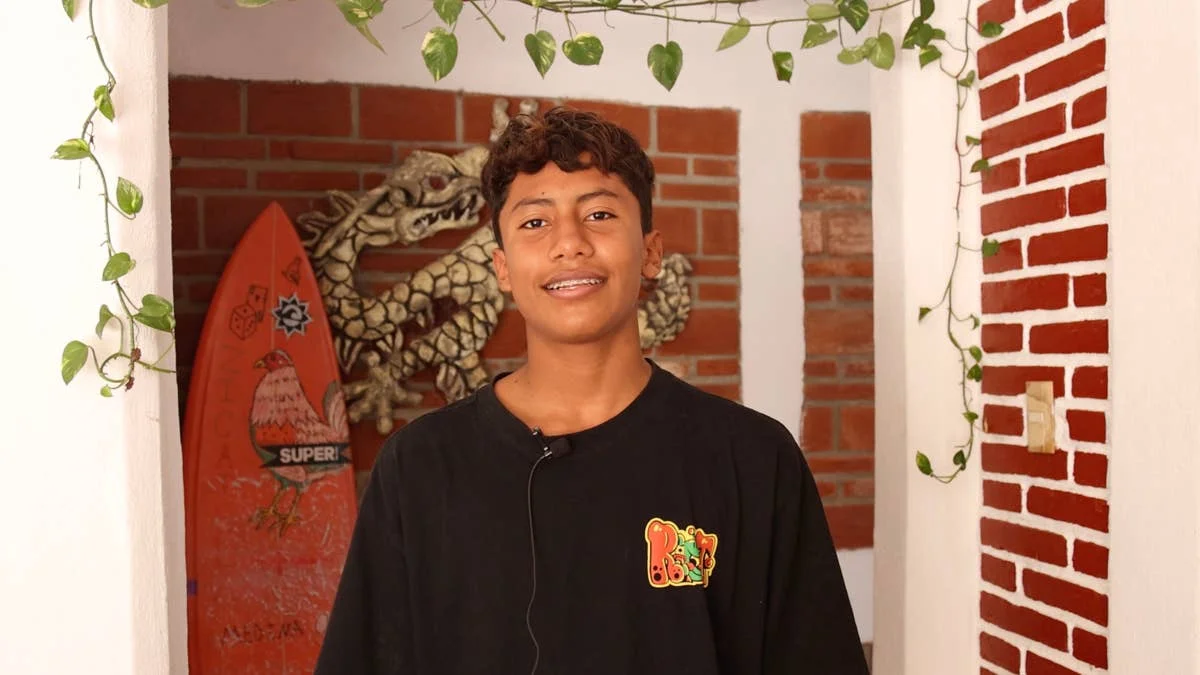
@casalunalu_mx
According to Vandielli, Axel was the only Mexican in the water that day. He was the only local. With Puerto's history and the generations of homegrown chargers like the Ramírez and Ramos families — that's a big deal.
The day before, 50-foot faces had run through. Even when the next day's sets came in closer to 20, everyone on the beach knew another 50-footer could still come.
"You're sitting for the 20-footer, knowing that the day before there were 50s," Vandielli says. Most of the world's seasoned big-wave surfers chose to wait. Axel didn't. He went for it and made his mark.
What Comes Next
Axel has clear goals. He wants to be one of the best big-wave surfers in Puerto. He wants sponsors that will support his travel to other heavy waves around the world. He wants to be one of the top big-wave surfers, period.
In 10 years, he says, he wants to be remembered as exactly that.
Vandielli is bullish. "He's still really young, without so many responsibilities and commitments. I hope he can continue this learning process in surfing, in fishing, in life in general, as a person growing up here in Zicatela and in Puerto."
And he's seen this before. Years ago, when Jafet Ramos was Axel's age, Vandielli was watching him do exactly what he's now watching Axel do, and that is paddle into waves bigger than the ones men twice his age were willing to take. Now Jafet is the mentor and the line keeps moving forward.
Puerto Escondido has long been a required stop on the pro big-wave circuit. In recent years it's lost some of its visibility, many surfers chasing longer barrels elsewhere, on softer reefs, with less consequence.
Vandielli doesn't agree with the trade-off. "Puerto is a wave that scars you," he says. "Emotionally or literally. It's like Hawaii, that's why it is called the Mexican Pipeline."
The day of the swell, the Mexican Pipeline had only one local in the water. He doesn't have any sponsors (yet) but we'll be certainly seeing much more of Axel to come.
Spanish Version
Axel Medina tiene 17 años. La mañana del día más grande de esa racha demencial de swells, era el único mexicano en el agua en Zicatela.
Las olas ese día rondaban los 30 a 40 pies, con caras de más de 50. El día anterior había producido lo que los locales de Puerto Escondido llaman un renacimiento — del fondo de arena de Zicatela, esa ola que muchos conocen como el Mexican Pipeline. Para cuando Axel llegó con su tabla y su chaleco inflable, hasta los veteranos curtidos estaban en las rocas mirando. La onda no era bonita. Se veía tenebroso.
"Me dijeron: 'No te metas, está muy heavy. No tiene tanto power la moto, no te vamos a poder rescatar,'" cuenta Axel sobre los locales que trataron de convencerlo de no remar. "Yo les mentí y les dije: 'No voy a entrar a agarrar olas, nada más voy a remar y sentir la vibra.'"
Remó. Agarró olas. Lo regañaron en la playa cuando salió. Este es Axel Medina.
Nacido Para Esto
Axel viene de una familia surf de Puerto Escondido. Su papá surfeaba Zicatela. Sus abuelos lo apoyaban. Su mamá todavía pone para los pasajes de torneos. Él estaba en el agua antes de poder caminar.
"Desde chiquito mi papá me llevaba al mar," dice Axel. "Me agarraba de las costillas, me levantaba y me llevaba en la ola."
Las olas que busca no son las maniobras técnicas que definen el surf competitivo actual de olas chicas. Son las más pesadas que pueda encontrar.
"Lo mío no es tanto la maniobra," dice. "Es más las olas grandes." Creció viendo a los chargers locales — Jafet Ramos, Roger Ramírez, Marcial Monreal, y a su propio papá. Cada uno una leyenda en Puerto. Cada uno una pieza del linaje al que Axel se está incorporando ahora.
El Revolcón
El día del swell, Axel se sentó en las rocas casi una hora, viendo, decidiendo. Había llevado su chaleco. Vio a los chargers extranjeros Tom Lowe y Logan Hayes remar y encontrar olas. Eso terminó de decidirlo.
"Me dije: 'No, pues voy a entrar a remar mínimo para sentir la vibra,'" cuenta. La primera ola se le hizo vacía. Le dio la vuelta, pero al último momento se hizo doble ola, explotó, y lo brincó al frente. "Pero esa primera no la sentí tan fuerte," dice.
La segunda lo encontró más adentro de lo que quería estar. "Fui a remar por otra y no se veía tan grande. Me sumergí y explotó. Me empezó a revolcar, me sumergió hasta abajo. Me hizo tocar la arena — como si fuera una sentadilla."
Trató de impulsarse desde el fondo y no pudo. "Dije: 'No, pues traigo chaleco.'" Buscó la jaladera del chaleco. No la encontraba. Se le había subido atrás.
"Cuando la jalé, salí impulsado hacia arriba. Pero ya venía otra atrás. Entonces desinflé el chaleco para poder sumergirme."
Salió. Volvió a remar afuera. Cuando le preguntan qué pasaba por su mente durante la peor ahogada de su vida, la respuesta de Axel es simple: encontrar la jaladera, jalarla, respirar, prepararse para la siguiente. No había espacio para nada más.
"Me dije: 'Estás seguro de que te vas a tirar?'" cuenta sobre el momento antes de remar. "Y luego dije: 'Nada, de huevos.'"
Hace Falta Una Banda Para Criar Un Charger
Axel pudo haber remado esas olas solo, pero el camino que lo llevó hasta ahí no fue un viaje en solitario.
Pregúntale a Axel quién lo trajo hasta aquí, y va a empezar con los nombres prácticos. León, un amigo que tiene carro y lo lleva con sus tablas grandes del centro a Zicatela — algo no menor cuando andas persiguiendo ventanas de swell con un quiver que no cabe en una moto. Vandielli Esmael Días, que graba sus sesiones y revisa el material con él para encontrar qué está funcionando y qué no.
"Me ayudan a ver en qué estoy mal, seguir corrigiendo y mejorar," dice Axel. Luego su familia. Sus papás y abuelos que financian los viajes a torneos. Su chica, que lo mantiene motivado.
Y después su mentor, Jafet Ramos. Jafet, charger de Puerto Escondido por derecho propio, empezó a trabajar con Axel hace como medio año. Primero habló con el papá de Axel. Después empezó a coachearlo.
"Fue de los primeros que me ayudó a aprender cómo sacar un tubo," dice Axel. "Yo veo a Jafet como un coach." Aquí está la frase que dice más sobre lo que Jafet le ha dado, "Cuando está muy heavy Zicatela, normalmente tienes que preocuparte por ti mismo, no por alguien más. Y Jafet conoce la ola tan bien que se preocupa por los que está ayudando."
En una ola que te deja en puro instinto de supervivencia, alguien eligió voltear la cabeza — y traer a la siguiente generación con él. "Una persona de huevos," dice Axel de su mentor. "Se tira de huevos."
A Través Del Lente
Un fotógrafo veterano de Puerto Escondido, Vandielli, que lleva 22 años documentando Zicatela, estuvo en la playa la mañana del swell. Vio a Axel pasar frente a su casa con la tabla y el chaleco, chiflarle para llamar su atención, señalarlo desde ahí.
"Desde ese momento yo estaba seguro de que iba a entrar." Ese tipo de certeza se gana. Vandielli ha visto crecer a Axel. Ha visto en él lo que llama "el joven que he visto con más pasión por las olas grandes" en sus 22 años en esa playa. Pasión no significa imprudencia. Significa compromiso.
"Axel está bastante conectado con el océano," dice. "Con el surfing, con las clases, con la pesca. Está capacitado. Yo confío en él. Obviamente en una condición extrema cualquiera puede estar vulnerable, porque el mar definitivamente es más fuerte que todos nosotros juntos. Pero él tiene la capacidad y el derecho de estar ahí afuera sin que uno lo cuestione por estar joven."
Vandielli tiene su propio sistema de puntuación para Zicatela en días grandes. Remar afuera vale un punto. Agarrar una ola vale tres. Entrar al tubo vale cinco. Salir del tubo vale diez.
Axel hizo algo más: remó, agarró la ola, entró al tubo — y después de salir le cayó un set encima. "Ese día no era un día bonito," dice Vandielli. "No se veía perfecto el tubo. Se veía tenebroso."
También dice que fue una especie de renacimiento. De todos los swells que ha documentado en dos décadas, este se comió más arena que ninguno en memoria reciente. El fondo de arena de Zicatela quedó reorganizado. Un capítulo nuevo está empezando.
El Único
Según Vandielli, Axel fue el único mexicano en el agua ese día. El único local. Con la historia de Puerto Escondido — generaciones de chargers locales como las familias Ramírez y Ramos — eso no es poca cosa.
El día anterior habían pasado caras de 50 pies. Incluso cuando los sets del día siguiente venían más cerca de 20, todos en la playa sabían que otro de 50 podía aparecer.
"Te ubicas para la ola de 20 pies sabiendo que el día anterior habían salido de 50," dice Vandielli. La mayoría de los mejores big wave surfers del mundo eligieron esperar. Axel no. Remó. Agarró su ola. Salió.
Lo Que Viene
Axel tiene metas claras. Quiere ser uno de los mejores big wave surfers de Puerto. Quiere patrocinios que apoyen sus viajes a otras olas grandes alrededor del mundo. Quiere estar entre los mejores big wave surfers del mundo, punto.
En 10 años, dice, quiere que lo recuerden como exactamente eso.
Vandielli es optimista. "Todavía está bastante joven, sin tantas responsabilidades y compromisos. Espero que pueda seguir dando continuidad a ese proceso de aprendizaje — en el surfing, en la pesca, en la vida en general, como persona creciendo aquí en Zicatela y en Puerto."
Y ya ha visto esto antes. Hace años, cuando Jafet Ramos tenía la edad de Axel, el fotógrafo lo veía haciendo exactamente lo que ahora ve hacer a Axel — remando olas más grandes que las que hombres del doble de su edad estaban dispuestos a agarrar. Ahora Jafet es el mentor. La línea sigue avanzando.
Puerto Escondido ha sido por mucho tiempo parada obligatoria en el circuito profesional de big wave surfing. En años recientes ha perdido algo de visibilidad — los pros ahora van directo al sur a buscar tubos más largos, en arrecifes más suaves, con menos consecuencias.
El fotógrafo no concuerda con el trueque. "Puerto es una ola que te cicatriza," dice. "Emocional o literalmente. Es como Hawaii — pero el Mexican Pipeline."
El día del swell, el Mexican Pipeline tuvo a un solo local en el agua. Salió. Volvió a remar afuera.
Related: Puerto Escondido Goes Berserk During Biggest Swell in 10 Years (Video)